.svg)


.webp)
.webp)
.png)
.png)


.png)


.png)

.png)

.png)


Recent Posts
.jpg)
.jpg)
.jpg)


Categories
Tags
Table of content
SHARE THIS ARTICLE
Is this blog hitting the mark?
Contact Us
Table of Contents
- Key Takeaways
- Leading QA Outsourcing Companies in USA 2025 - 26
- Benefits of QA Outsourcing
- QA Outsourcing at QAble
- How to Choose the Right QA Outsourcing Company
- Final Thoughts
- FAQs
QA outsourcing has evolved from a cost-saving strategy into a core part of modern software delivery.
As development cycles accelerate and systems become more complex, maintaining consistent software quality internally has become increasingly challenging. Engineering teams are expected to release faster while ensuring stability across platforms, devices, and environments.
This shift is reflected in both market growth and industry behavior.
The India outsourced software testing market was valued at $2.58 billion in 2024 and is projected to reach $11.1 billion by 2035, growing at a CAGR of over 14%. This growth highlights the increasing reliance on outsourced QA capabilities to support scalable software delivery.
At the same time, outsourcing itself has become a mainstream strategy across industries.
According to Deloitte’s Global Outsourcing Survey, nearly 70% of companies outsource part of their operations, with organizations increasingly doing so not just for cost reduction, but for access to specialized expertise and scalability.
Cost efficiency still plays a role. Companies can achieve up to 30% cost savings through outsourcing models, while improving delivery speed and operational flexibility.
This shift is further reinforced by how quality is being treated within organizations.
As per Capgemini’s World Quality Report, 67% of organizations have embedded quality engineering into core business operations, indicating that QA is no longer a support function, but a critical part of the delivery strategy.
At the same time, software testing itself has evolved.
It is no longer limited to manual validation or defect detection. Modern QA involves:
- Automation across UI, API, and system layers
- Continuous testing integrated into CI/CD pipelines
- Performance and reliability validation
- Data-driven insights for release decisions
However, many organizations still struggle with:
- Scaling test coverage across complex systems
- Maintaining stable automation without flakiness
- Integrating QA into development workflows
- Managing infrastructure and testing environments
This is where QA outsourcing becomes a strategic decision.
Not all QA outsourcing companies operate in the same way. While most providers offer similar services, the real difference lies in how testing is executed, integrated, and scaled within the development lifecycle.
This guide will help you:
- Explore leading QA outsourcing companies in the USA
- Understand how QA outsourcing models differ across providers
- Compare execution approaches and capabilities
- QAble’s approach to QA outsourcing
- Choose a QA outsourcing partner aligned with your engineering workflows and product needs
Related Read: External QA vs. Internal QA
Key Takeaways
- QA outsourcing has become a strategic approach for scaling software testing, improving quality, and supporting faster release cycles.
- Most QA outsourcing companies offer similar services, but differ significantly in execution, integration, and long-term maintainability.
- Effective QA outsourcing depends on automation maturity, CI/CD integration, and alignment with engineering workflows.
- India-led QA outsourcing models provide strong scalability and execution efficiency, while US-based models focus on structure and enterprise governance.
- Stable automation, risk-based coverage, and continuous testing are critical for successful QA outsourcing outcomes.
- QA outsourcing delivers maximum value when implemented as a system rather than a standalone service.
- Choosing the right QA outsourcing company requires evaluating execution capability, scalability, and integration with your product lifecycle.
Leading QA Outsourcing Companies in USA 2025 - 26
QA outsourcing companies in the USA differ in how they approach scalability, automation, and integration with engineering workflows.
While most providers offer similar QA outsourcing services, the real difference lies in execution maturity and how well QA outsourcing is embedded into the development lifecycle.

India-led QA outsourcing delivery models continue to play a major role due to their strength in scalable execution and automation expertise, while US-based QA outsourcing companies typically emphasize structured delivery, governance, and enterprise alignment.
Below is a curated list of leading QA outsourcing companies in the USA based on capabilities, execution approach, and typical engagement models.
1. QAble
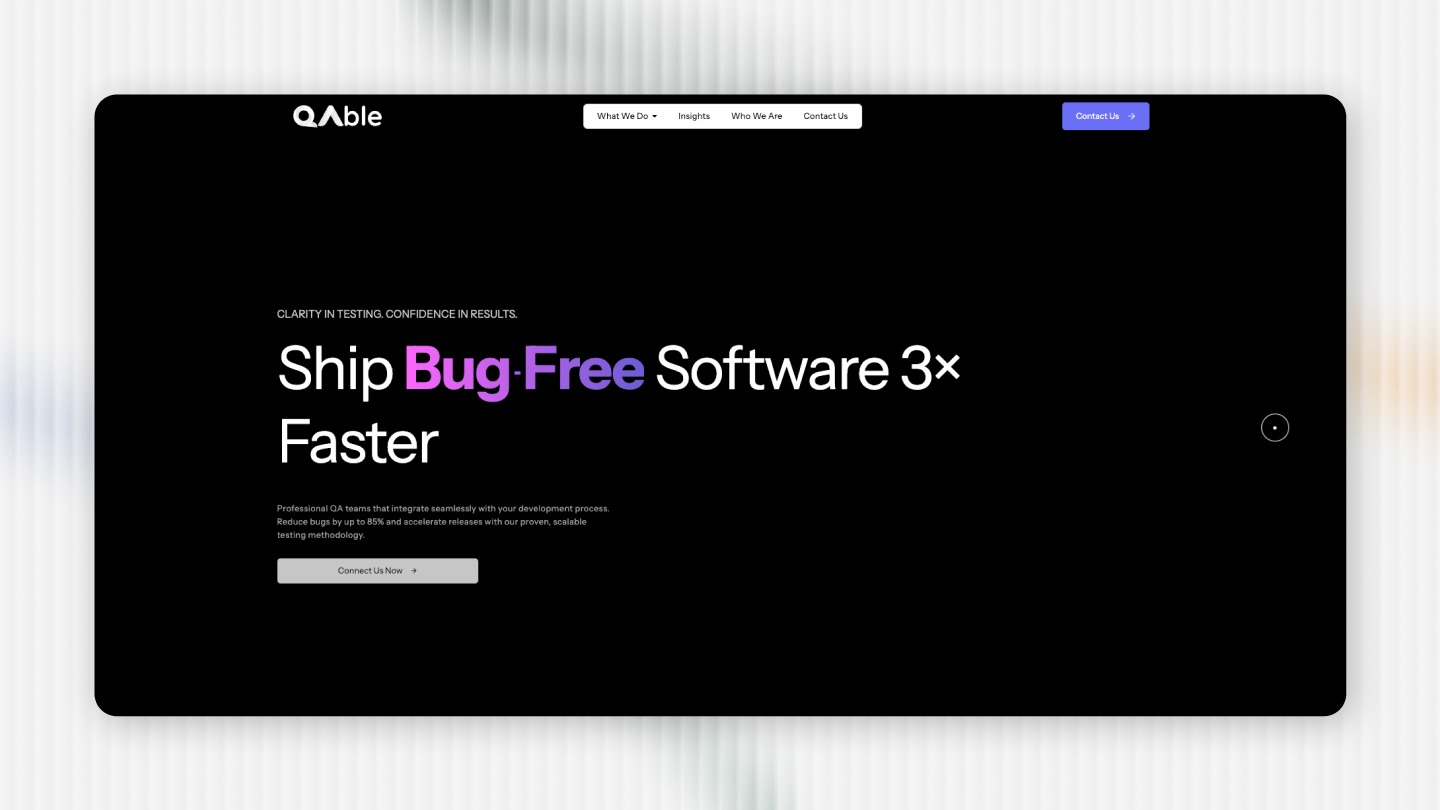
QAble operates as a quality engineering and QA outsourcing partner, focusing on building scalable QA outsourcing systems rather than isolated testing services. The approach integrates automation, CI/CD workflows, and structured execution to support both product teams and enterprise environments.
Core capabilities:
- QA outsourcing and dedicated QA teams
- Automation-first QA outsourcing systems
- AI-assisted QA outsourcing workflows
- CI/CD-integrated QA outsourcing execution
- API, performance, and system-level testing
Outsourcing focus:
- System-driven QA outsourcing across coverage, execution, and reporting
- Stable automation with minimal flakiness in CI environments
- Risk-based coverage aligned with business-critical workflows
- Scalable QA outsourcing execution through parallel runs and optimized distribution
- Clear debugging insights with logs, traces, and structured reporting
2. QASource
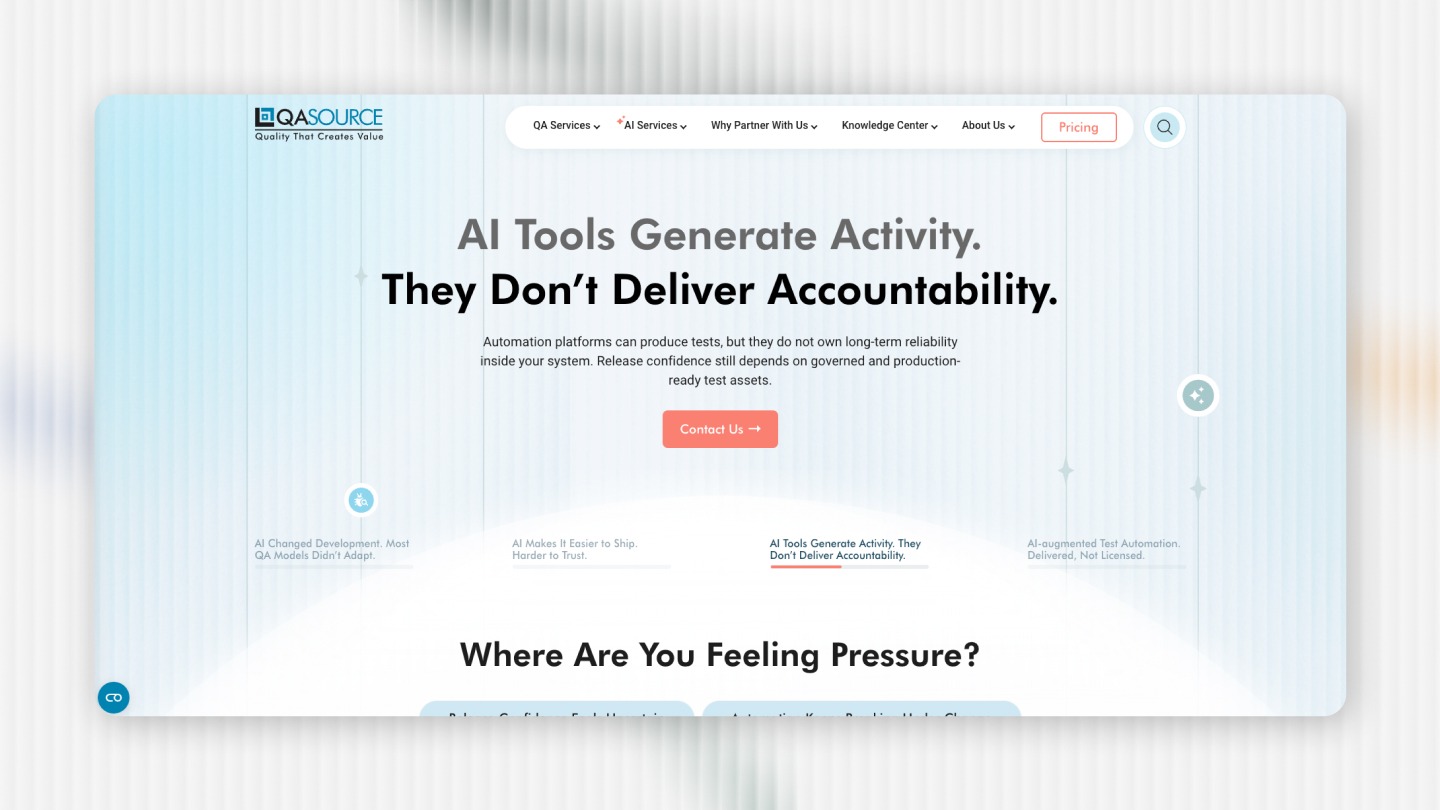
QASource provides offshore QA outsourcing services with dedicated testing teams integrated into client engineering workflows. The company focuses on long-term QA outsourcing partnerships and scalable execution models.
Core capabilities:
• Automation and functional QA outsourcing
• API and performance testing
• Dedicated QA outsourcing teams
Outsourcing focus:
• Integration with development teams for continuous QA outsourcing support
• Scalable regression and automation execution
• Long-term QA outsourcing engagement models
3. Testlio

Testlio offers QA outsourcing through a managed crowdtesting model, providing access to a global network of testers across devices and environments.
Core capabilities:
- Crowdtesting and manual QA outsourcing
- Mobile and usability testing
- Managed QA outsourcing services
Outsourcing focus:
- Real-world testing across diverse environments
- Scalable QA outsourcing through distributed tester networks
- Fast feedback cycles for product releases
4. A1QA
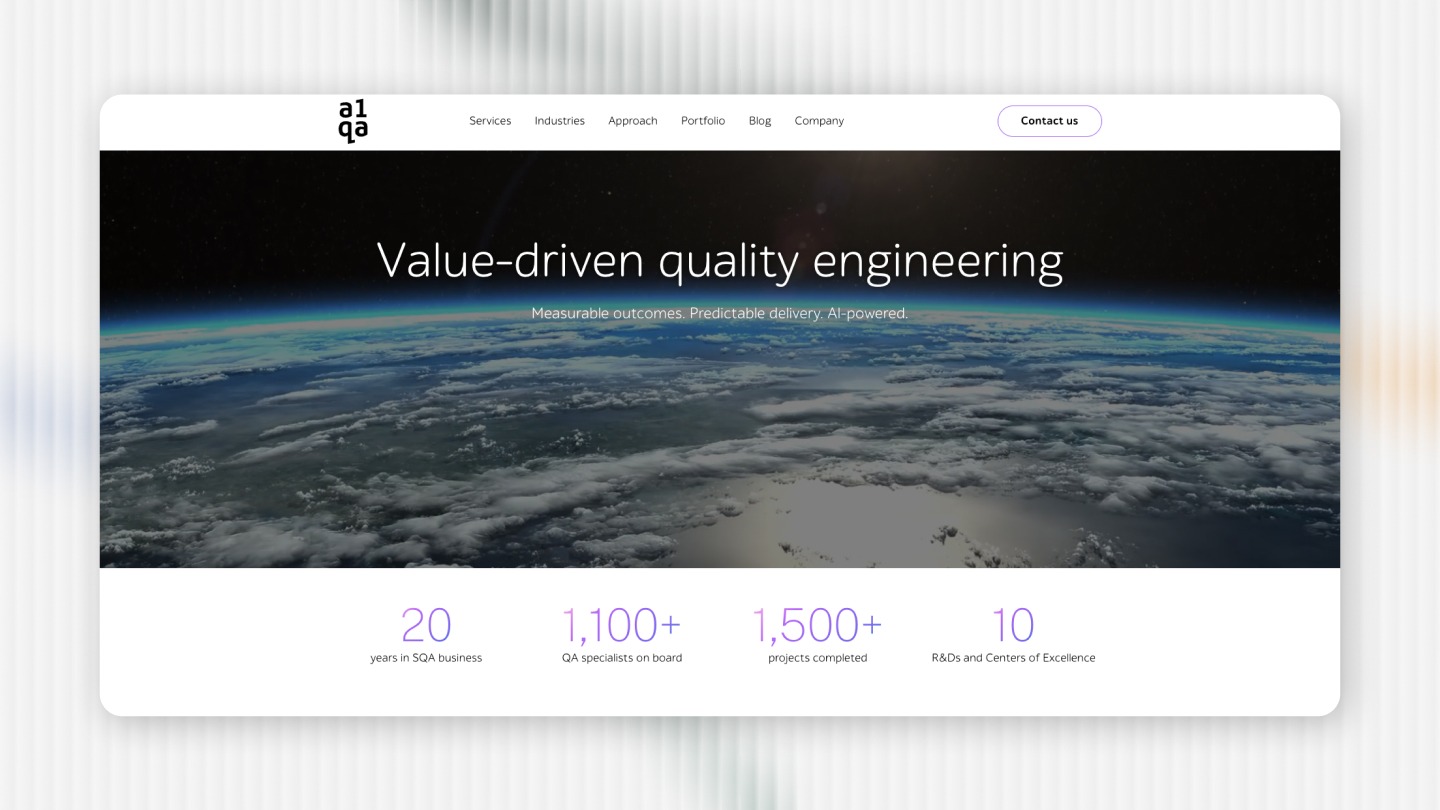
A1QA provides QA outsourcing services with a structured approach across the software development lifecycle, supporting both partial and full QA outsourcing ownership.
Core capabilities:
- Functional and automation QA outsourcing
- Performance and security testing
- QA consulting
Outsourcing focus:
- End-to-end QA outsourcing support across SDLC
- Structured QA processes and documentation
- Flexible QA outsourcing models based on project needs
5. DeviQA
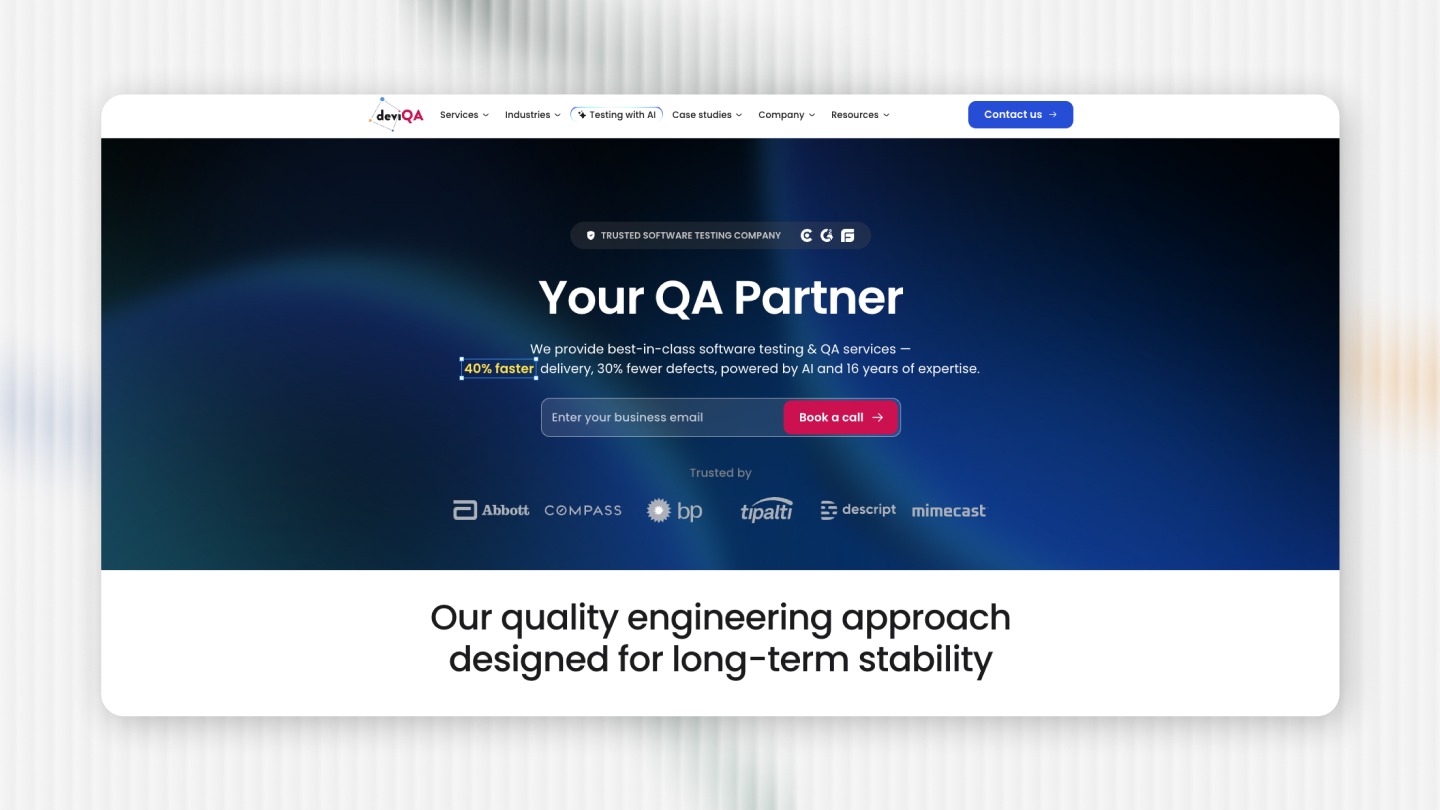
DeviQA focuses on automation-driven QA outsourcing with emphasis on efficiency, performance, and modern testing practices.
Core capabilities:
- Automation QA outsourcing
- Performance testing
- AI-assisted QA outsourcing
Outsourcing focus:
- Automation-heavy QA outsourcing execution for faster delivery
- Scalable QA outsourcing systems aligned with CI/CD
- Focus on reducing testing time and effort
6. TestFort

TestFort offers QA outsourcing services with experience in long-term projects across enterprise and mid-sized organizations.
Core capabilities:
- Automation and manual QA outsourcing
- Performance testing
- QA consulting
Outsourcing focus:
- Full-cycle QA outsourcing support
- Long-term QA outsourcing engagement models
- Enterprise QA outsourcing program execution
7. Cigniti Technologies
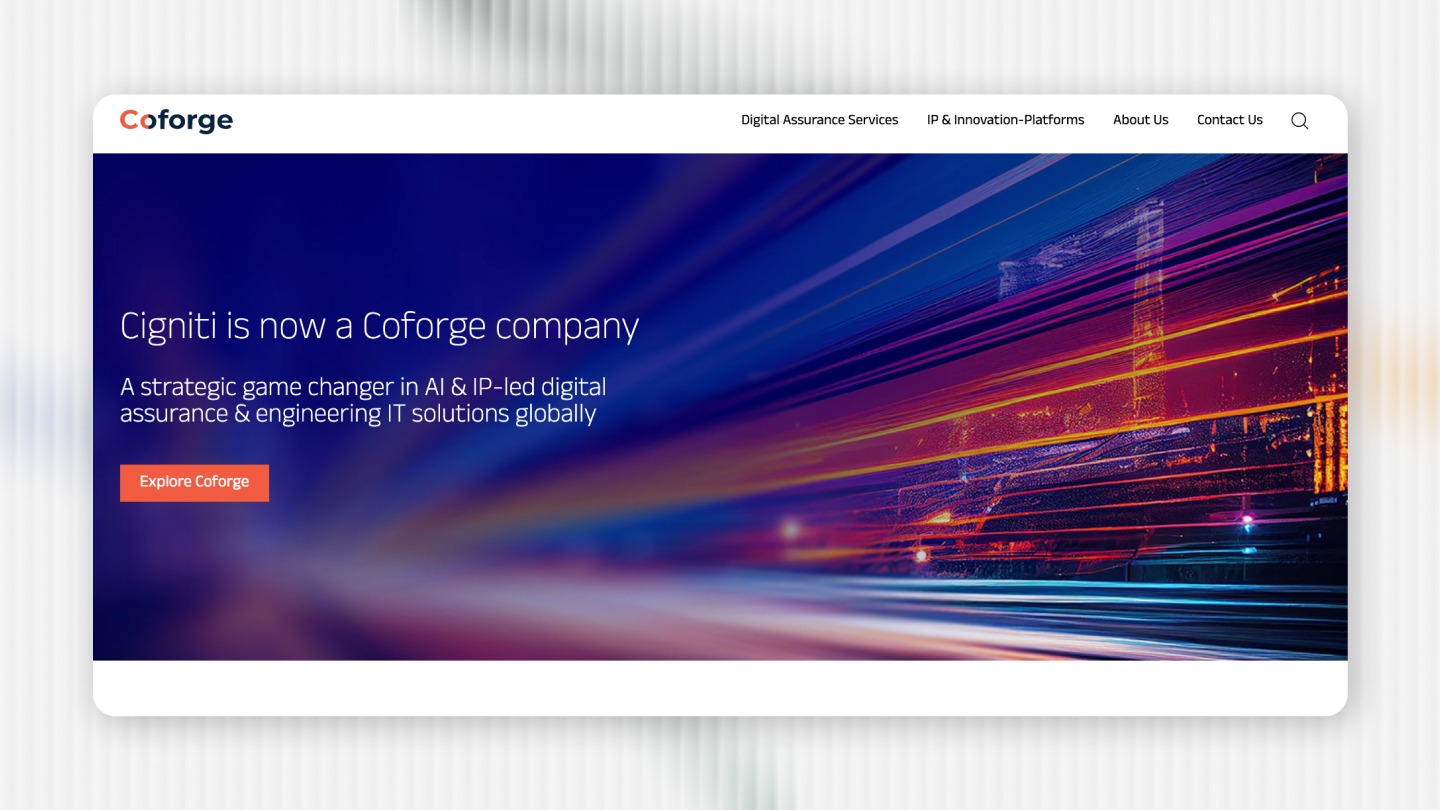
Cigniti provides digital assurance and QA outsourcing services with strong focus on enterprise-scale systems and continuous testing.
Core capabilities:
- Digital assurance and QA outsourcing
- Automation testing
- Performance engineering
Outsourcing focus:
- Large-scale QA outsourcing programs
- Continuous QA outsourcing across systems
- Enterprise-level validation and reporting
8. QA Mentor
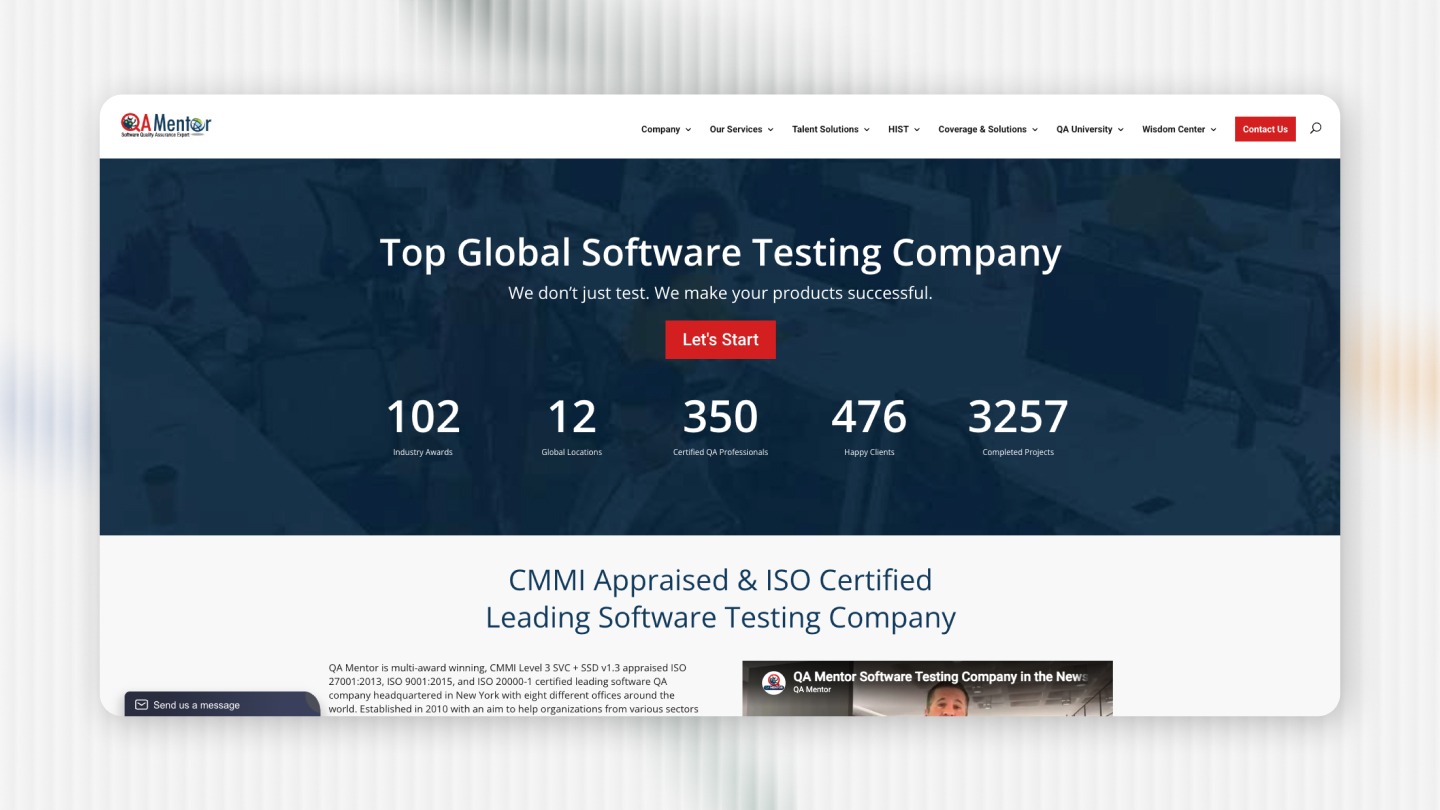
QA Mentor offers QA outsourcing and consulting services across different industries with flexible delivery models.
Core capabilities:
- Functional and automation QA outsourcing
- Security and performance testing
- QA consulting
Outsourcing focus:
- Flexible QA outsourcing engagement models
- End-to-end QA outsourcing support
- Global QA outsourcing delivery capabilities
9. Mindful QA
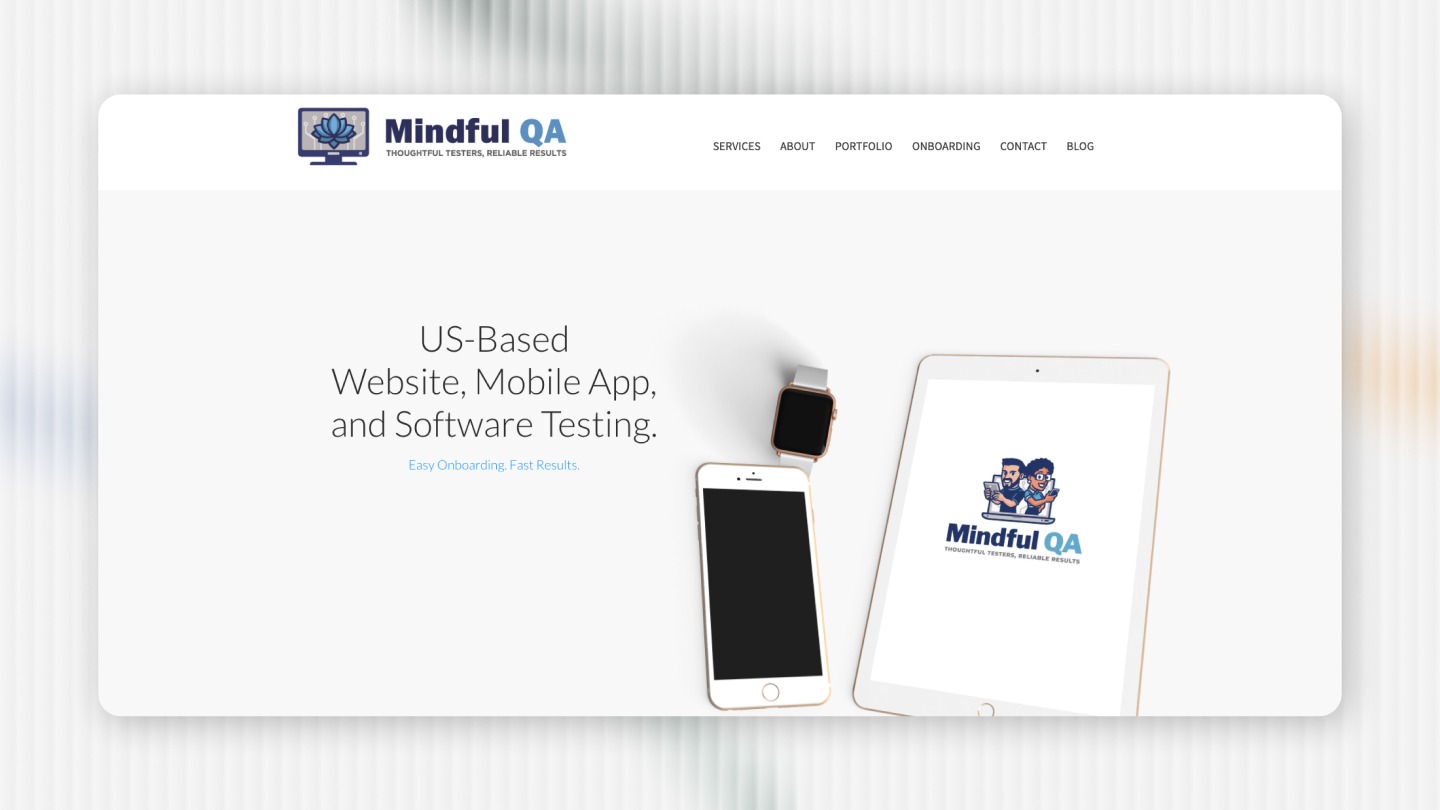
Mindful QA provides QA outsourcing services with focus on agile teams and fast-growing product companies.
Core capabilities:
- Manual and automated QA outsourcing
- Regression testing
- QA support
Outsourcing focus:
- Quick onboarding of QA outsourcing teams
- Flexible and scalable QA outsourcing support
- Continuous QA outsourcing aligned with product teams
10. QualityLogic
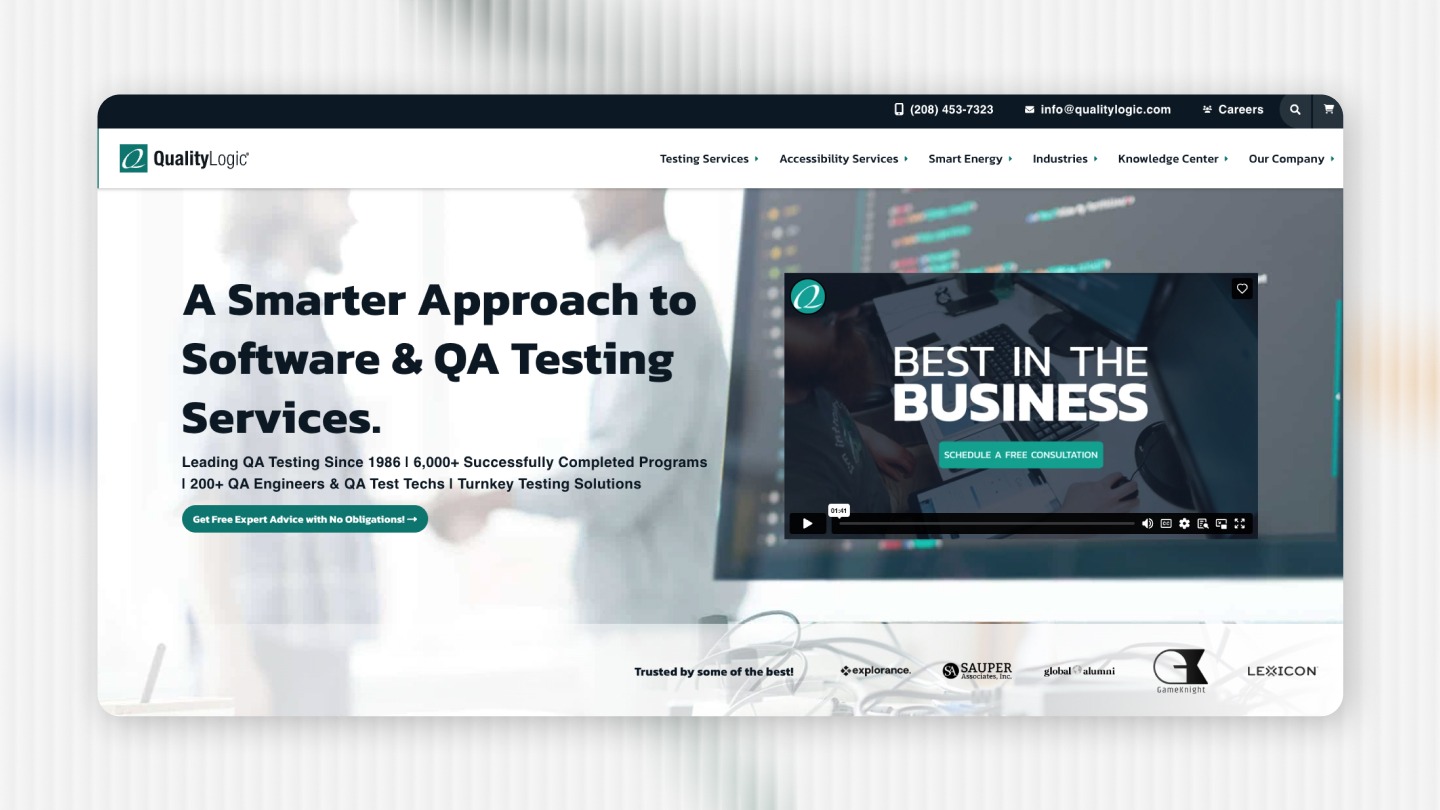
QualityLogic focuses on QA outsourcing with emphasis on usability, accessibility, and multi-platform validation.
Core capabilities:
- Functional QA outsourcing
- Accessibility testing
- Mobile testing
Outsourcing focus:
- Usability-driven QA outsourcing approaches
- Compliance and accessibility validation
- Multi-platform QA outsourcing execution
Summary
QA outsourcing companies in the USA differ not in the QA outsourcing services they offer, but in how those services are executed, integrated, and scaled.
India-led QA outsourcing models bring strong scalability and execution efficiency, while US-based QA outsourcing providers emphasize structured delivery and enterprise alignment. The most effective QA outsourcing partners combine both capabilities to support modern development environments.
Choosing the right QA outsourcing company requires evaluating how well their QA outsourcing approach aligns with your product complexity, release cycles, and engineering workflows.
Related Read: QA Testing Best Practices
Benefits of QA Outsourcing
QA outsourcing provides more than just additional testing capacity. When implemented correctly, it enables organizations to improve quality, accelerate delivery, and scale testing operations without increasing internal complexity.
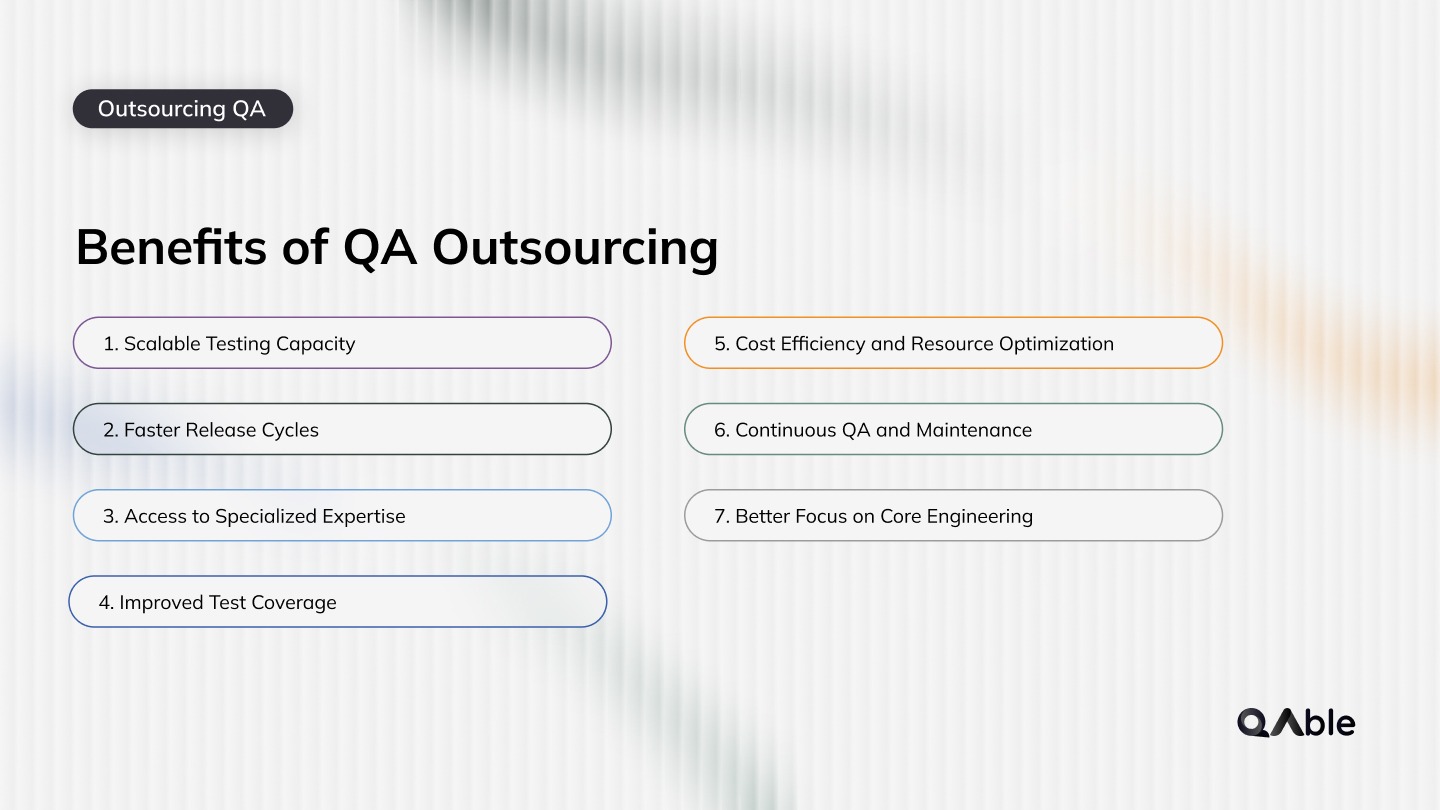
Below are the key benefits of QA outsourcing in modern software development environments.
1. Scalable Testing Capacity
What it enables:
- Ability to scale QA efforts based on product needs
- Support for large regression suites and multi-platform testing
How it works in practice:
- Dedicated QA outsourcing teams can be expanded or reduced based on release cycles
- Parallel execution allows faster validation across environments
Internal teams often struggle to keep up with growing testing requirements. QA outsourcing provides the flexibility to scale without long hiring cycles.
2. Faster Release Cycles
What it enables:
- Continuous testing aligned with CI/CD pipelines
- Faster feedback on code changes
How it works in practice:
- QA outsourcing teams integrate into development workflows
- Automation ensures quick validation across builds
Speed is critical in modern development. QA outsourcing helps reduce bottlenecks in testing and supports faster releases.
3. Access to Specialized Expertise
What it enables:
- Access to experienced QA engineers and domain experts
- Knowledge of modern tools, frameworks, and testing strategies
How it works in practice:
- Outsourcing partners bring expertise in automation, performance, and system testing
- Teams are already trained and ready to execute
Building in-house expertise takes time. QA outsourcing allows immediate access to specialized skills.
4. Improved Test Coverage
What it enables:
- Broader coverage across user journeys, platforms, and systems
- Validation across edge cases and complex workflows
How it works in practice:
- Dedicated QA outsourcing teams focus on coverage expansion
- Combination of manual and automation testing ensures depth
Limited coverage increases risk. QA outsourcing helps ensure critical workflows are properly validated.
5. Cost Efficiency and Resource Optimization
What it enables:
- Reduced operational costs compared to in-house hiring
- Better utilization of internal engineering resources
How it works in practice:
- QA outsourcing eliminates hiring, training, and infrastructure overhead
- Teams can focus on development while QA is handled externally
Organizations can achieve up to 30% cost savings through QA outsourcing models, while maintaining quality and speed.
6. Continuous QA and Maintenance
What it enables:
- Ongoing testing across releases
- Stability in long-term QA processes
How it works in practice:
- QA outsourcing teams maintain test suites and automation systems
- Continuous validation ensures consistent quality
QA is not a one-time activity. QA outsourcing ensures ongoing validation as systems evolve.
7. Better Focus on Core Engineering
What it enables:
- Internal teams can focus on development and innovation
- Reduced burden on engineering teams
How it works in practice:
- QA responsibilities are handled by dedicated outsourcing teams
- Clear separation of responsibilities improves efficiency
Engineering teams can prioritize product development without being slowed down by testing overhead.
Summary
QA outsourcing provides organizations with scalability, expertise, and operational efficiency. While cost savings remain an important factor, the primary value lies in enabling faster releases, improving test coverage, and maintaining consistent quality.
When aligned with engineering workflows, QA outsourcing becomes a critical component of modern software delivery.
Related Read: QA Outsourcing
QA Outsourcing at QAble
QA outsourcing is most effective when it is designed as a system that integrates with development workflows, rather than operating as a separate testing function.
Many organizations adopt QA outsourcing to scale testing, but face challenges in maintaining stability, coverage, and long-term efficiency. These issues often arise when QA is treated as a set of tasks instead of a structured execution system.
At QAble, QA outsourcing is approached as a quality engineering system, where automation, execution, and insights work together to support continuous delivery and product reliability.
What industry expertise do we have?
QAble supports a wide range of industries where software quality directly impacts business outcomes, user experience, and system reliability. Each domain brings different testing challenges, requiring tailored QA outsourcing approaches.
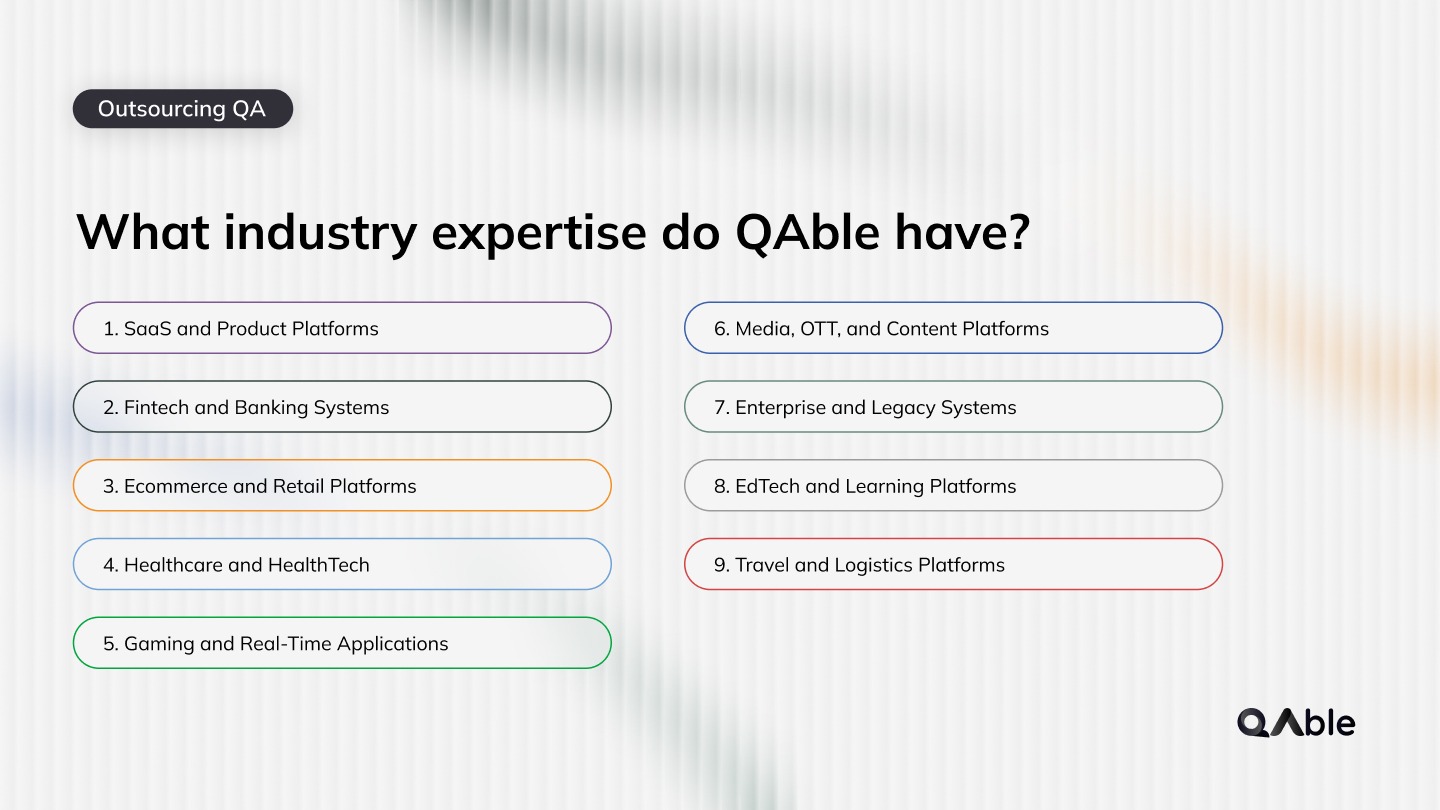
SaaS and Product Platforms
- Frequent releases and evolving feature sets
- Need for continuous regression and stable automation
- Multi-tenant and configuration-heavy environments
Fintech and Banking Systems
- High accuracy requirements for transactions and calculations
- Compliance and security validation
- API-heavy architectures and integration testing
Ecommerce and Retail Platforms
- Critical user journeys such as search, checkout, and payments
- High traffic variability during peak events
- Cross-device and cross-browser compatibility
Healthcare and HealthTech
- Data sensitivity and compliance requirements
- Validation of workflows with real-world impact
- Integration with external systems and devices
Gaming and Real-Time Applications
- Performance, latency, and concurrency challenges
- Real-time interactions and event-driven systems
- Continuous updates and user experience consistency
Media, OTT, and Content Platforms
- High-load streaming environments
- Multi-device compatibility
- Performance and buffering optimization
Enterprise and Legacy Systems
- Complex workflows across multiple systems
- Integration-heavy environments
- Need for structured validation and regression stability
EdTech and Learning Platforms
- High user concurrency during peak usage
- Interactive workflows and content delivery
- Cross-platform accessibility
Travel and Logistics Platforms
- Real-time data synchronization and booking systems
- Complex integrations across services
- Reliability during high transaction volumes
What QA outsourcing services do we offer?
QAble provides QA outsourcing services designed to support both short-term execution needs and long-term quality systems.
Core services include:
- Test automation across UI, API, and system layers
- Functional and regression testing aligned with user workflows
- Performance and load testing for system reliability
- API and integration testing for complex architectures
- Continuous testing integrated into CI/CD pipelines
These services are structured to work as part of the engineering lifecycle, ensuring QA outsourcing supports both development speed and product stability.
How do we approach QA outsourcing?
QA outsourcing at QAble is driven by a quality engineering approach, supported by a structured quality intelligence system.
This includes:
- Risk-based coverage focused on business-critical workflows
- Data-driven insights from test execution and failure patterns
- Feedback loops that improve coverage and stability over time
- Visibility into test results for better release decision-making
Rather than focusing only on test execution, this approach ensures that QA outsourcing contributes to continuous improvement and predictable quality outcomes.
What are our priorities in QA outsourcing?
QAble focuses on key priorities that define effective QA outsourcing in modern engineering environments:
1. Stability over volume
Automation is designed to be reliable in CI environments, minimizing flaky tests and inconsistent results.
2. Coverage aligned with impact
Testing focuses on critical workflows and high-risk areas instead of maximizing test count.
3. CI/CD integration
QA outsourcing is integrated into development pipelines to provide continuous validation and faster feedback.
4. Scalability of execution
Test execution is optimized through parallel runs and efficient distribution to support growing systems.
5. Maintainability of test systems
Automation is structured to evolve with the product, reducing long-term maintenance overhead.
What results can you expect from QA outsourcing with us?
By approaching QA outsourcing as a system, QAble enables:
- Faster and more reliable release cycles
- Stable automation with consistent CI feedback
- High-impact test coverage aligned with business goals
- Reduced maintenance effort and operational overhead
- Data-driven decision-making through structured insights
QA outsourcing becomes a core part of the engineering system that supports speed, scalability, and product quality.
Related Read: Software Quality Business Risk
How to Choose the Right QA Outsourcing Company
Choosing the right QA outsourcing company is not about who offers QA services, but how effectively those services are executed, integrated, and scaled within your engineering workflows.
Most QA outsourcing companies provide similar services. The real difference lies in execution maturity, system design, and long-term maintainability.
How do you evaluate QA outsourcing strategy?
What to evaluate:
- Whether testing is aligned with critical user journeys and business impact
- Coverage across UI, API, and system layers
- Balance between automation and manual testing
What strong execution looks like:
- Risk-based coverage focused on high-impact workflows
- Clear mapping between test cases and product behavior
- Minimal redundant or low-value tests
A weak strategy leads to high effort with limited impact, while a strong QA outsourcing strategy ensures meaningful coverage and reliable validation.
How well does the company integrate with CI/CD?
What to evaluate:
- Integration of QA outsourcing into CI/CD pipelines
- Stability of execution across builds
- Speed of feedback from test runs
What strong execution looks like:
- Reliable test execution in CI environments
- Fast feedback on every code change
- Seamless integration with tools like GitHub Actions, GitLab CI, or Jenkins
QA outsourcing is only effective when it supports continuous delivery. Poor CI integration leads to delayed releases and unreliable feedback.
How stable and reliable is their automation?
What to evaluate:
- Frequency of flaky tests and reruns
- Approach to handling instability
- Test data and environment management
What strong execution looks like:
- Minimal flakiness with consistent execution
- Root cause analysis for failures
- Controlled and repeatable test environments
Unstable automation reduces trust in QA outsourcing and slows down release cycles.
Can the QA outsourcing team scale with your product?
What to evaluate:
- Ability to scale testing across growing systems
- Support for parallel execution
- Handling of large regression suites
What strong execution looks like:
- Parallel execution with optimized distribution
- Predictable execution time across builds
- Flexibility to scale teams and test coverage
QA outsourcing must evolve with product complexity. Without scalability, it becomes a bottleneck.
How maintainable are their test systems?
What to evaluate:
- Structure of automation frameworks
- Reusability of components
- Effort required to update tests
What strong execution looks like:
- Clean architecture with reusable components
- Clear standards for selectors, fixtures, and utilities
- Tests treated as code with reviews and governance
Poor maintainability increases long-term costs and slows development cycles.
How do they handle debugging and reporting?
What to evaluate:
- Clarity of reports and failure insights
- Availability of logs, traces, and debugging artifacts
- Ease of identifying root causes
What strong execution looks like:
- Detailed failure insights with logs and traces
- Clear reporting aligned with engineering workflows
- Faster issue identification and resolution
QA outsourcing should provide actionable insights, not just pass or fail results.
Do they provide data-driven insights and decision support?
What to evaluate:
- Whether testing provides insights beyond execution
- Ability to prioritize risks and identify critical issues
- Use of data to improve testing over time
What strong execution looks like:
- Risk-based prioritization aligned with business impact
- Feedback loops that improve coverage and stability
- Data-driven insights for release decisions
Modern QA outsourcing should support decision-making, not just validation.
How well do they align with your engineering workflows?
What to evaluate:
- Compatibility with your tech stack and development process
- Collaboration between QA and engineering teams
- Adaptability to changing architectures
What strong execution looks like:
- Seamless integration into development workflows
- Strong collaboration with engineering teams
- Flexibility to adapt to evolving systems
Misalignment leads to inefficiencies, delays, and gaps in validation.
Summary
Choosing the right QA outsourcing company requires evaluating how well their execution model fits into your development lifecycle.
A strong QA outsourcing partner will:
- Build QA as a system, not just a service
- Integrate seamlessly into CI/CD workflows
- Provide stable, scalable, and maintainable execution
- Enable faster, data-driven release decisions
The goal is not just to outsource QA, but to build a system that supports consistent, reliable, and scalable software delivery.
Final Thoughts
QA outsourcing has become a critical part of modern software delivery. As systems grow in complexity and release cycles accelerate, maintaining quality internally becomes increasingly difficult without scalable testing systems.
While many QA outsourcing companies offer similar services, the real difference lies in how those services are executed, integrated, and sustained over time. This includes how well QA is aligned with engineering workflows, how stable automation is in CI environments, and how effectively testing supports release decisions.
The comparison across QA outsourcing companies in the USA highlights that execution maturity is the key differentiator. Some providers focus on structured delivery and enterprise alignment, while others emphasize scalability and automation-driven execution.
India-led QA outsourcing models continue to demonstrate strong capabilities in scaling execution and supporting continuous testing, while US-based approaches bring governance and structured processes. The most effective QA outsourcing strategies combine both to support modern development environments.
For organizations evaluating QA outsourcing, the focus should not be on service offerings alone, but on how well the partner can build and operate QA as a system. This includes coverage strategy, execution stability, CI/CD integration, and long-term maintainability.
At QAble, QA outsourcing is approached as part of a broader quality engineering system. The focus is on building scalable automation, integrating testing into development workflows, and providing clear insights that support faster and more reliable releases.
This approach ensures that QA outsourcing is not just an extension of testing capacity, but a system that enables consistent quality, scalability, and delivery speed.
Discover More About QA Services
sales@qable.ioDelve deeper into the world of quality assurance (QA) services tailored to your industry needs. Have questions? We're here to listen and provide expert insights


Viral Patel
Co-Founder
Follow


Viral Patel is the Co-founder of QAble, delivering advanced test automation solutions with a focus on quality and speed. He specializes in modern frameworks like Playwright, Selenium, and Appium, helping teams accelerate testing and ensure flawless application performance.


.jpg)


.webp)

