.svg)


.webp)
.webp)
.png)
.png)


.png)


.png)

.png)

.png)


Recent Posts
.jpg)
.jpg)
.jpg)


Categories
Tags
Table of content
SHARE THIS ARTICLE
Is this blog hitting the mark?
Contact Us
Table of Contents
- Key Takeaways
- Top Accessibility Testing Companies in India and USA
- How to Choose the Right Accessibility Testing Company
- Final Thoughts
- FAQs
Accessibility is no longer a niche requirement. It has become a critical part of how digital products are built, used, and evaluated.
According to the World Health Organization (WHO), over 1.3 billion people globally live with some form of disability, representing nearly 16% of the world’s population. This makes accessibility essential for ensuring inclusive digital experiences at scale.
At the same time, most digital products are still not accessible. The WebAIM Million Report, based on WCAG guidelines, shows that over 96% of website homepages have detectable accessibility errors, with an average of more than 50 accessibility issues per page.
This gap has both technical and business implications.
From a user perspective, inaccessible systems create barriers in navigation, interaction, and understanding. From a business perspective, it limits reach, impacts user experience, and increases regulatory and compliance risks.
However, the challenge is not just about compliance.
Many organizations approach accessibility as a one-time audit aligned with WCAG standards. While this may address immediate issues, it does not ensure accessibility across evolving systems, frequent releases, and complex product architectures.
Accessibility today requires a more structured and continuous approach.
It needs to be:
- Integrated into development workflows
- Validated continuously across releases
- Aligned with real user behavior and system complexity
This shift is also changing how organizations evaluate accessibility testing partners.
India and the USA have emerged as key regions for accessibility testing services. India offers strong execution capabilities, scalable QA systems, and growing expertise in automation-driven accessibility validation. The USA brings structured approaches aligned with compliance, governance, and enterprise systems.
The difference is not in whether accessibility testing is offered, but in how effectively it is executed, integrated, and maintained over time.
This is where system-driven approaches become important.
Organizations are increasingly looking for partners who can handle accessibility not just as a compliance requirement, but as part of a broader quality engineering system that supports continuous delivery and long-term reliability.
This guide will help you:
- Explore top accessibility testing companies in India and USA
- Understand how accessibility capabilities differ across providers
- Compare execution approaches and compliance strategies
- Choose a partner aligned with your product, users, and engineering workflows
Related Read: Accessibility testing complete guide
Key Takeaways
- Accessibility testing is essential for ensuring inclusive user experiences and meeting global compliance standards such as WCAG and ADA.
- Most accessibility testing companies offer similar compliance services, but differ in how effectively accessibility is implemented and maintained.
- Automated tools alone are not sufficient, and effective accessibility testing requires a combination of manual validation and real-user testing.
- Continuous accessibility testing integrated into development workflows is more effective than one-time audits.
- India offers strong capabilities in scalable accessibility testing and automation-driven execution, while the USA focuses on structured compliance and governance.
- Accessibility should be treated as part of a broader quality engineering system rather than a standalone activity.
- Choosing the right accessibility testing company depends on how well their approach aligns with your product, users, and engineering workflows.
Top Accessibility Testing Companies in India and USA
Accessibility testing companies differ in how they approach compliance, usability, and long-term accessibility maintenance. While most providers offer WCAG-based audits, only a subset integrate accessibility into continuous testing and engineering workflows.
Below is a curated list based on accessibility expertise, execution approach, and real-world validation capabilities.
1. QAble
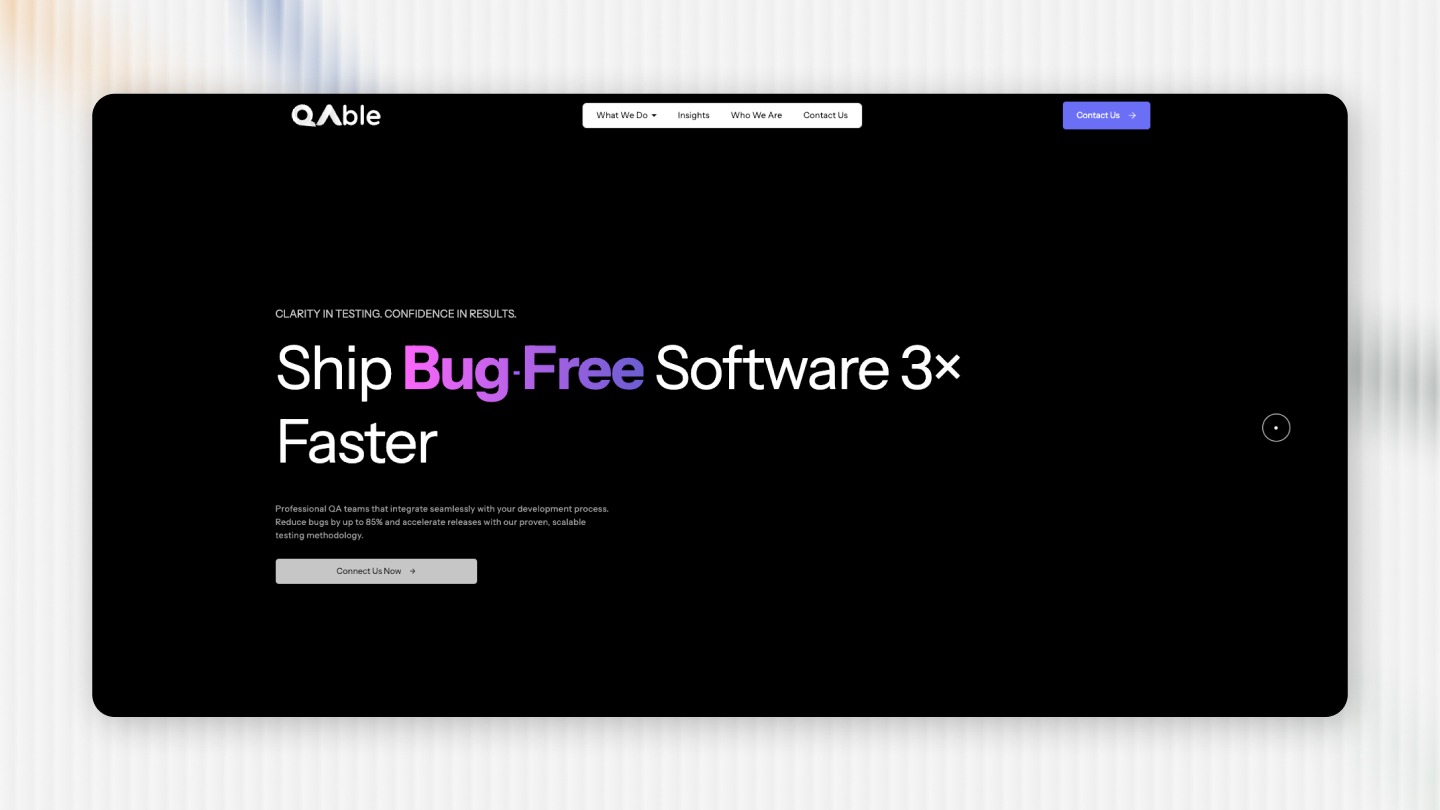
QAble operates as a quality engineering and intelligence partner, integrating accessibility testing into continuous QA systems. The approach focuses on ensuring accessibility across development workflows, CI pipelines, and real product usage.
Core capabilities:
- Accessibility testing integrated with quality engineering systems
- WCAG, ADA, and compliance validation
- Automation-driven accessibility checks
- Continuous accessibility validation across releases
Accessibility focus:
- Accessibility aligned with real user journeys and workflows
- Integration into CI/CD pipelines for continuous validation
- Combination of automated and manual accessibility testing
- Structured reporting with actionable insights
2. Deque Systems
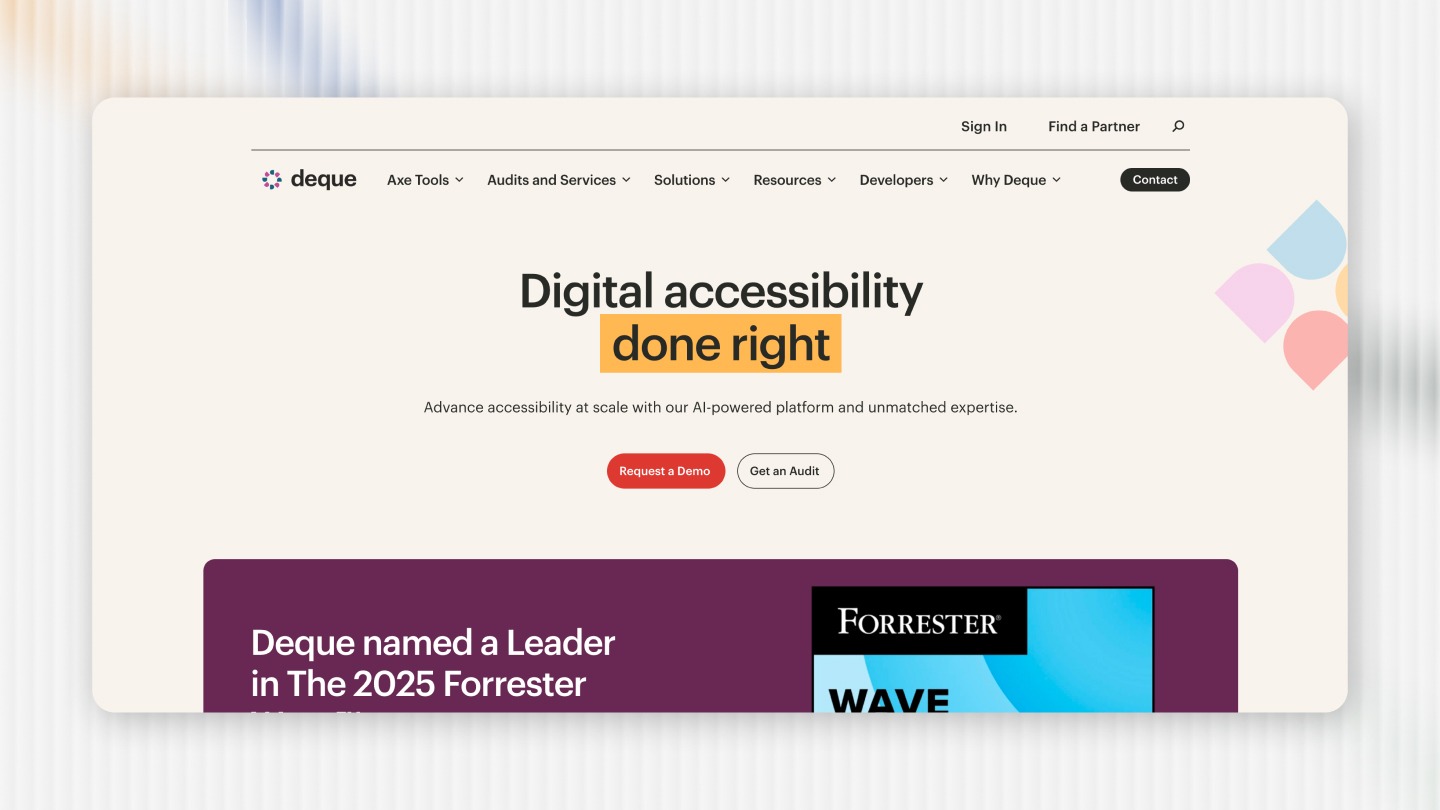
Deque is a well-established accessibility company known for both testing services and tools like axe, widely used across the industry.
Core capabilities:
- Accessibility testing and consulting
- Accessibility tools and frameworks
- Training and compliance support
Accessibility focus:
- Strong alignment with WCAG standards and accessibility best practices
- Combination of automated tools and expert validation
- Enterprise accessibility programs and platform-level solutions
3. Level Access
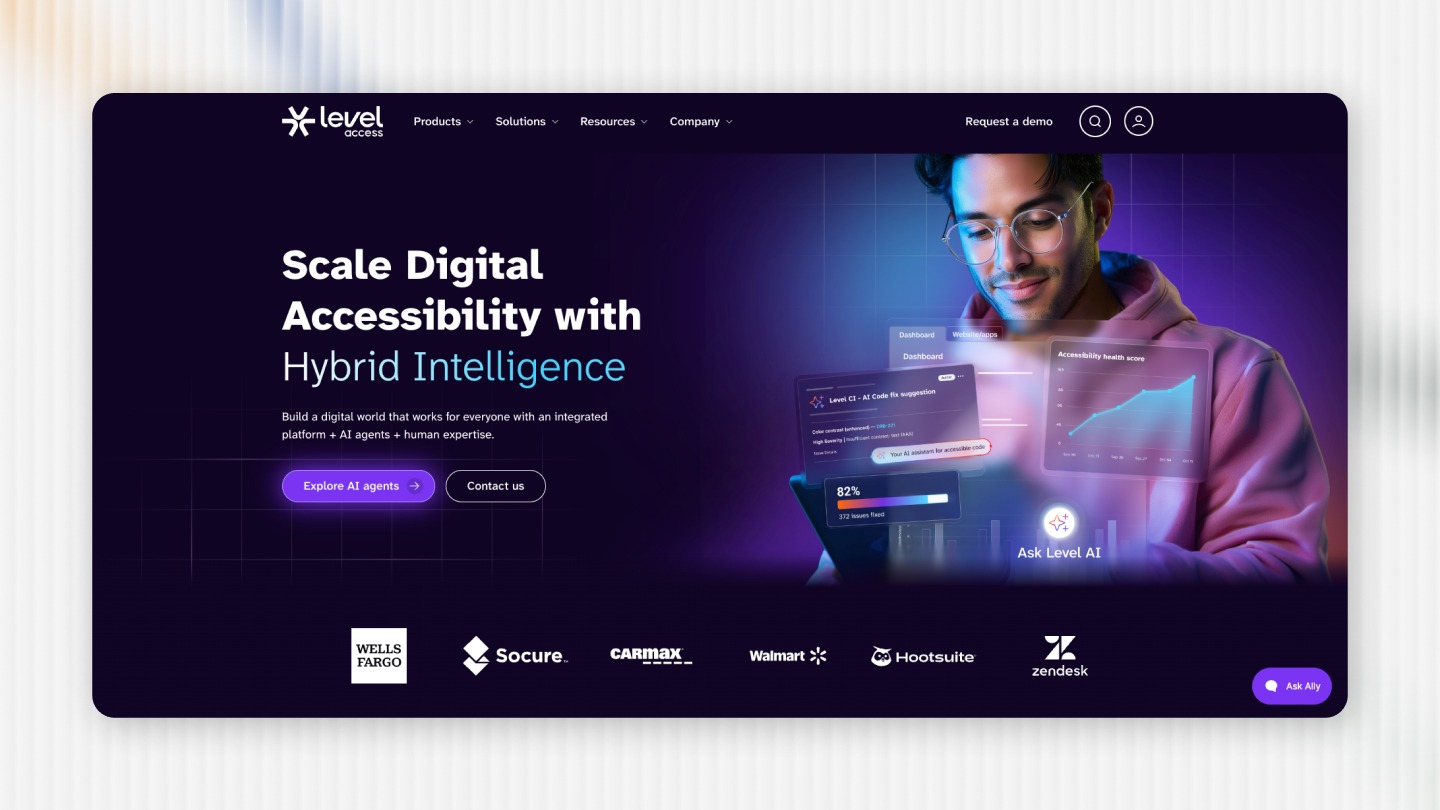
Level Access provides enterprise accessibility solutions combining testing, platform tools, and compliance management.
Core capabilities:
- Accessibility testing and audits
- Accessibility management platform
- Compliance and remediation support
Accessibility focus:
- Combination of automated scanning and manual testing
- User testing with people with disabilities
- Focus on enterprise compliance and accessibility governance
4. BarrierBreak
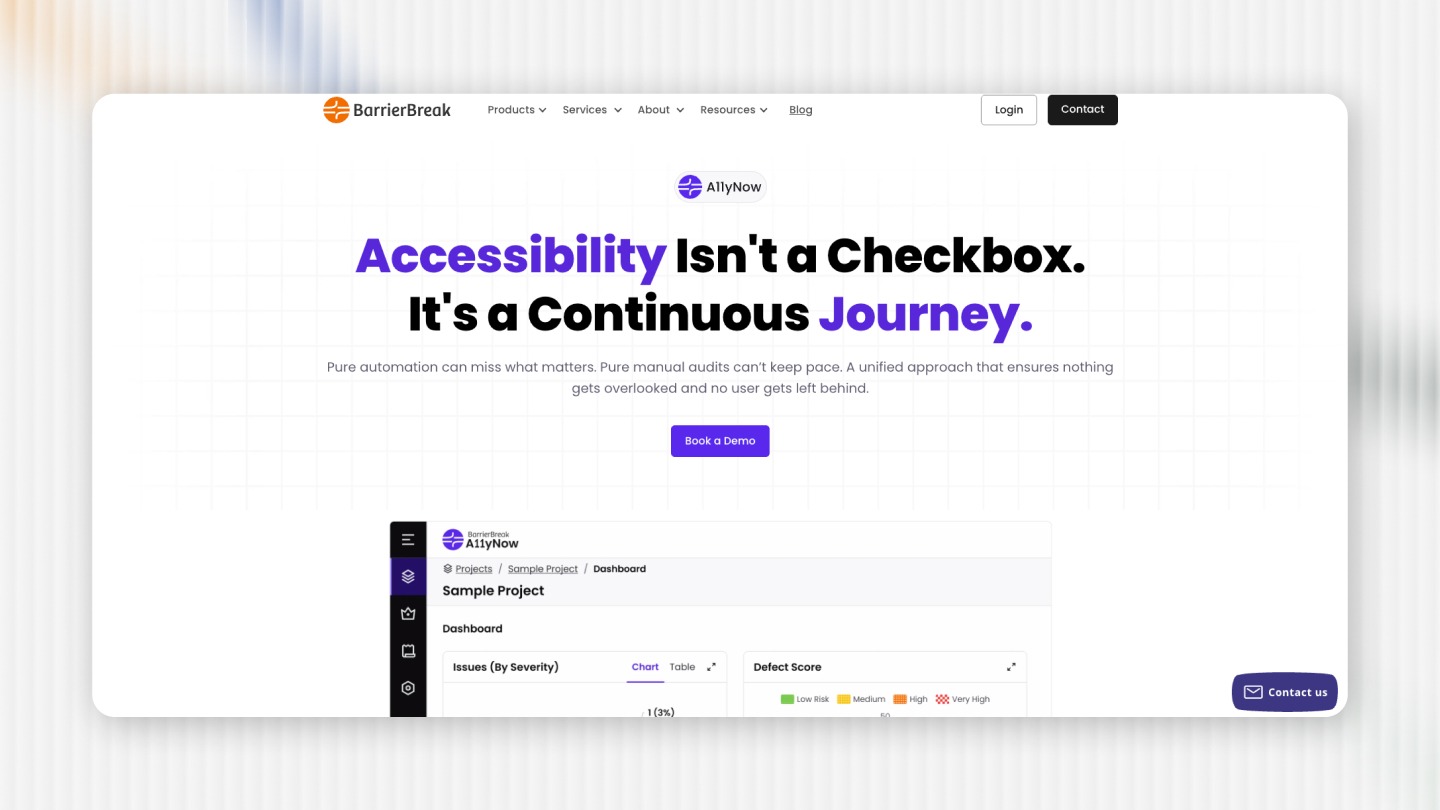
BarrierBreak is a global accessibility testing and consulting firm with strong presence across India and international markets.
Core capabilities:
- Accessibility audits and testing
- VPAT and compliance services
- Accessibility consulting
Accessibility focus:
- Testing aligned with WCAG, ADA, and Section 508
- Use of assistive technologies and real-user validation
- Focus on compliance and inclusive design
5. Accessible Minds
Accessible Minds provides accessibility testing and remediation services with a focus on compliance and inclusive product design.
Core capabilities:
- Accessibility audits and remediation
- WCAG and global compliance testing
- Accessibility consulting
Accessibility focus:
- Strong compliance expertise across WCAG, ADA, AODA, and EAA
- Certified accessibility testers and structured validation
- Focus on inclusive user experience and usability
6. QASource
QASource offers accessibility testing as part of its broader QA and quality engineering services.
Core capabilities:
- Accessibility testing and QA services
- Automation and performance testing
- Dedicated QA teams
Accessibility focus:
- Combination of manual and automated accessibility testing
- Expertise in WCAG, ADA, and Section 508
- Real-user testing and usability validation
7. Vision-Aid
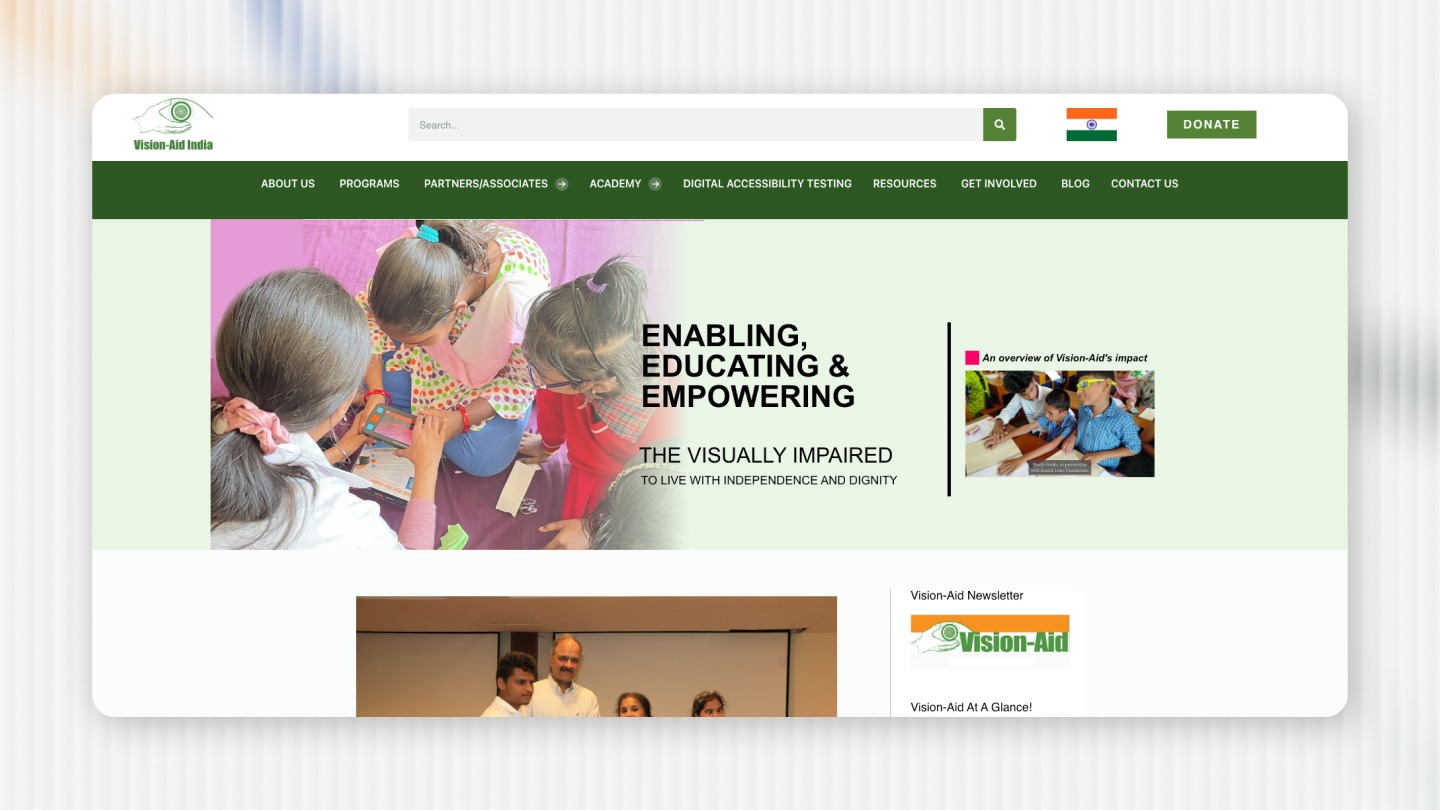
Vision-Aid focuses on accessibility testing along with training and real-user validation through testers with disabilities.
Core capabilities:
- Accessibility testing and consulting
- Accessibility training programs
- Usability testing
Accessibility focus:
- Testing with real users with disabilities
- Strong emphasis on usability and real-world accessibility
- Experience across web and mobile platforms
8. Vervali Systems
Vervali provides accessibility testing services with a focus on compliance and scalable QA execution.
Core capabilities:
- Accessibility testing and QA services
- Automation and digital testing
- Compliance validation
Accessibility focus:
- Combination of automated audits and manual validation
- Coverage across WCAG, ADA, and Section 508
- Focus on improving coverage and reducing accessibility risks
9. TestingBulls
TestingBulls offers accessibility testing services across global markets with focus on usability and compliance.
Core capabilities:
- Accessibility testing and QA services
- Functional and usability testing
- Global QA delivery
Accessibility focus:
- Validation across WCAG and ADA standards
- Testing across multiple impairment types
- Focus on improving user experience for diverse users
10. Aegis Softtech
Aegis Softtech provides accessibility testing services focused on compliance and inclusive digital experiences.
Core capabilities:
- Web accessibility testing
- QA and automation services
- Compliance validation
Accessibility focus:
- Expertise in WCAG, ADA, and Section 508
- Focus on inclusive design and usability
- Integration of accessibility into broader QA processes
Summary
Accessibility testing companies differ not in whether they support compliance standards, but in how effectively they ensure accessibility across real-world usage and evolving systems.
Key observations:
- Most providers focus on WCAG compliance, but differ in execution depth
- Real-user testing and assistive technology validation are critical differentiators
- Continuous accessibility integration into CI/CD is still evolving
The key difference lies in how accessibility is implemented, validated, and maintained over time.
Related Read: Top 10 accessibility testing tools
How to Choose the Right Accessibility Testing Company
Choosing an accessibility testing company is not just about compliance expertise. It is about how effectively accessibility is implemented, validated, and maintained within your product lifecycle.
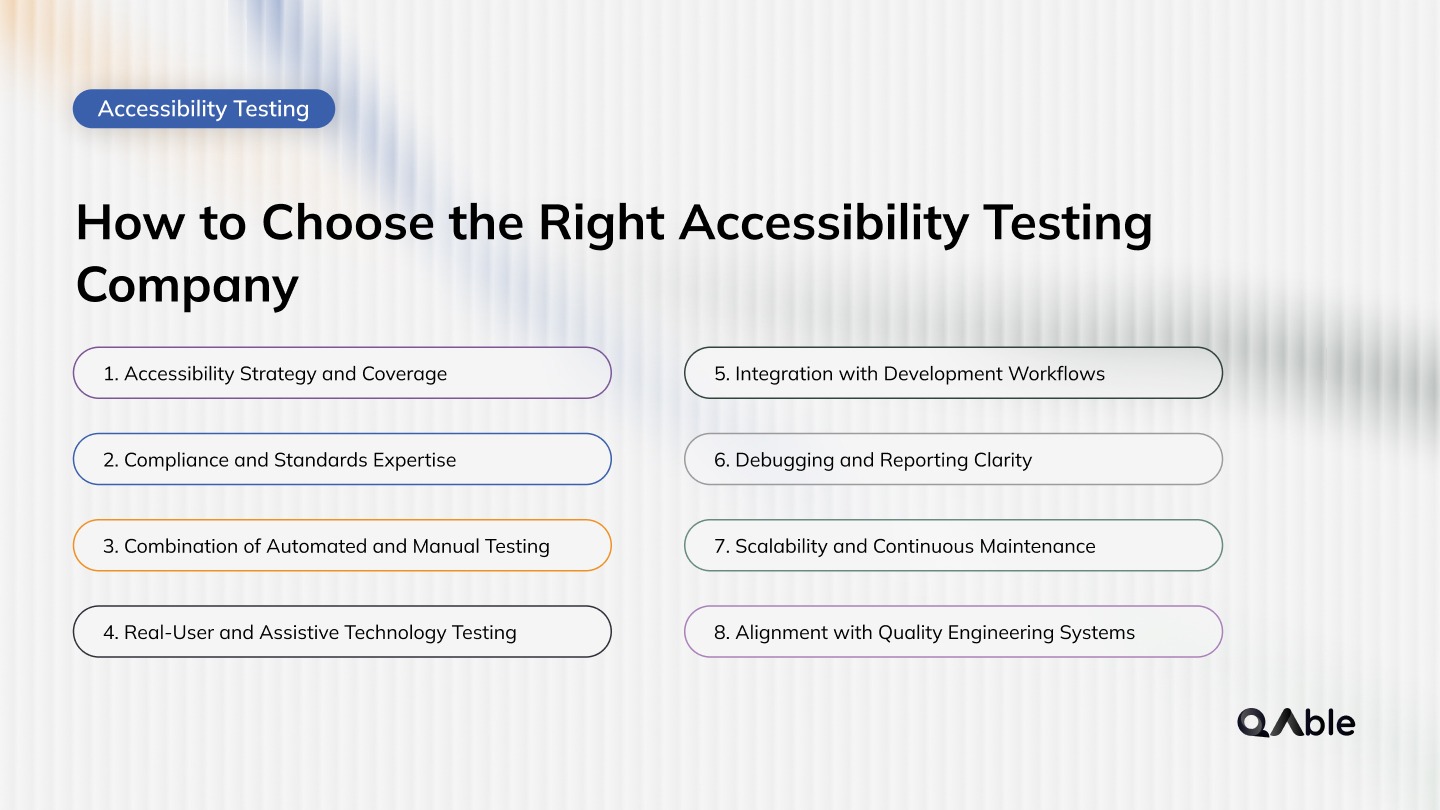
Most providers offer WCAG-based testing, but the real difference lies in execution, integration, and long-term sustainability.
1. Accessibility Strategy and Coverage
What to evaluate:
- Whether accessibility testing covers critical user journeys and workflows
- Alignment with WCAG standards and real user scenarios
- Coverage across UI, navigation, forms, and dynamic components
What strong execution looks like:
- Risk-based coverage focused on high-impact user flows
- Validation across multiple accessibility scenarios (keyboard, screen reader, etc.)
- Coverage aligned with both compliance and usability
Accessibility is not about checking components individually. It is about ensuring complete user journeys are accessible.
2. Compliance and Standards Expertise
What to evaluate:
- Experience with WCAG, ADA, Section 508, and other regulations
- Ability to interpret and apply guidelines in real systems
- Support for compliance documentation such as VPAT
What strong execution looks like:
- Accurate mapping of issues to WCAG criteria
- Clear reporting aligned with compliance requirements
- Support for remediation and audit readiness
Compliance reduces legal risk, but only when implemented correctly and consistently.
3. Combination of Automated and Manual Testing
What to evaluate:
- Use of automated tools alongside manual validation
- Ability to identify issues beyond tool-based detection
- Coverage across different accessibility dimensions
What strong execution looks like:
- Automated scans for quick detection of common issues
- Manual validation for complex interactions and usability
- Balanced approach across efficiency and depth
Automated tools cannot detect all accessibility issues. Manual validation is essential for real-world usability.
4. Real-User and Assistive Technology Testing
What to evaluate:
- Testing with screen readers and assistive technologies
- Inclusion of users with disabilities in validation
- Coverage across different impairment types
What strong execution looks like:
- Testing with tools like NVDA, JAWS, VoiceOver
- Validation of real interaction flows, not just static elements
- Feedback aligned with real user experience
Accessibility is about usability. Real-user validation ensures that systems work beyond technical compliance.
5. Integration with Development Workflows
What to evaluate:
- Whether accessibility testing is integrated into CI/CD pipelines
- Alignment with development and release workflows
- Ability to support continuous accessibility validation
What strong execution looks like:
- Accessibility checks embedded into pipelines
- Continuous validation across builds and releases
- Early detection of accessibility issues
Accessibility should not be a one-time activity. It needs to evolve with the product.
6. Debugging and Reporting Clarity
What to evaluate:
- Quality of accessibility reports and issue descriptions
- Ease of identifying and fixing issues
- Mapping between issues and guidelines
What strong execution looks like:
- Clear, actionable reports with WCAG references
- Detailed issue descriptions with reproduction steps
- Prioritization based on impact
Poor reporting slows down remediation and creates confusion for engineering teams.
7. Scalability and Continuous Maintenance
What to evaluate:
- Ability to maintain accessibility across releases
- Support for scaling across large systems
- Long-term engagement models
What strong execution looks like:
- Continuous monitoring and improvement of accessibility
- Coverage expansion with product growth
- Stable execution across evolving systems
Accessibility is not static. It must be maintained as systems evolve.
8. Alignment with Quality Engineering Systems
What to evaluate:
- Whether accessibility is integrated into broader QA practices
- Alignment with automation, performance, and system testing
- Ability to support end-to-end quality
What strong execution looks like:
- Accessibility integrated into overall testing strategy
- Combined validation across functional, usability, and compliance aspects
- Data-driven insights for decision-making
Accessibility works best when treated as part of a quality system, not as an isolated activity.
Summary
Choosing the right accessibility testing company requires evaluating how well their approach fits into your product, users, and engineering workflows.
A strong partner will:
- Go beyond compliance and focus on real user accessibility
- Combine automation, manual validation, and real-user testing
- Integrate accessibility into development and CI/CD workflows
- Maintain accessibility continuously across releases
The goal is not just to meet standards, but to ensure accessibility is consistently delivered as part of your product experience.
Related read: Software product quality and business risk
Final Thoughts
Accessibility testing is no longer limited to compliance requirements. It plays a critical role in how digital products are experienced by users and how consistently quality is maintained across releases.
As systems evolve and release cycles accelerate, accessibility can no longer be treated as a one-time audit. It needs to be continuously validated, integrated into development workflows, and aligned with real user behavior.
The comparison across accessibility testing companies in India and the USA shows that while most providers support WCAG and compliance standards, the real difference lies in execution. This includes how accessibility is tested across user journeys, how it integrates with CI/CD pipelines, and how effectively it is maintained over time.
India continues to demonstrate strong capabilities in scalable QA execution and automation-driven testing, making it well-suited for organizations looking to build and maintain accessibility at scale. The USA, on the other hand, brings structured approaches aligned with compliance, governance, and enterprise systems.
For many organizations, this also means rethinking accessibility testing services. Instead of standalone audits, accessibility testing needs to operate as a continuous service that evolves with the product, supports frequent releases, and ensures long-term compliance and usability.
At QAble, our accessibility testing services are designed as part of a broader quality engineering system. This includes integrating accessibility checks into automation workflows, validating real user journeys, and providing clear insights that support faster and more reliable release decisions.
This approach ensures that accessibility is not only implemented, but consistently maintained across releases without slowing down development.
The goal is not just to meet accessibility standards, but to build systems where accessibility is continuously ensured as part of software quality.
Discover More About QA Services
sales@qable.ioDelve deeper into the world of quality assurance (QA) services tailored to your industry needs. Have questions? We're here to listen and provide expert insights


Viral Patel
Co-Founder
Follow


Viral Patel is the Co-founder of QAble, delivering advanced test automation solutions with a focus on quality and speed. He specializes in modern frameworks like Playwright, Selenium, and Appium, helping teams accelerate testing and ensure flawless application performance.


.jpg)


.webp)

